The Psychology Behind Game Pre-Order Bonuses and Limited Editions
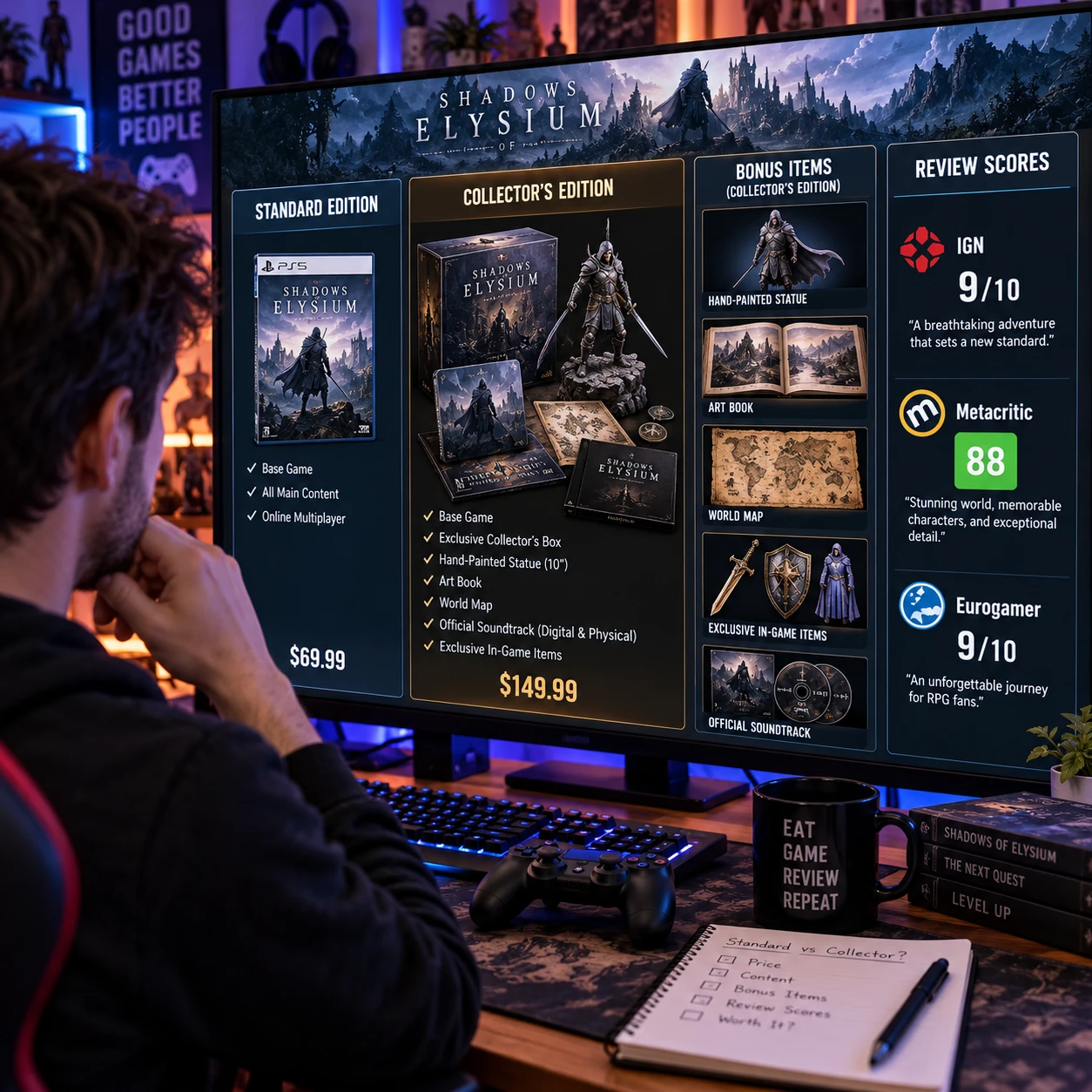
A new game announcement can quickly turn into a countdown: pre-order now for an exclusive outfit, early access, or a collector’s box that may soon disappear. These offers combine genuine rewards with psychological cues that make buying early feel exciting and urgent. Understanding those cues can help you decide whether a bonus suits your play style or simply makes waiting feel risky.
Pre-order bonuses and limited editions are not automatically bad value. Their appeal depends on what is included, how much it costs, and how comfortable you are buying before reviews reveal the game’s quality.
Why Early Rewards Feel So Appealing
Pre-order bonuses feel appealing because they add an immediate reward to a purchase you are already considering. Advance access, cosmetic items, or a small collection of in-game extras can make buying early seem more satisfying than waiting.
Part of the pull comes from reward anticipation. Looking forward to a game is enjoyable in its own right, and a bonus gives that anticipation something concrete to focus on. A character skin or weapon may also make you feel more connected to the game before launch, even if it does not change how it plays.
Timing matters, too. If a game is on your must-play list, pre-ordering can feel like securing your place for launch day. Early access may have practical value for someone with limited free time who wants to play over a particular weekend. But the same benefit may be minor if early access starts only a few days before the official release or if you prefer to wait for patches.
Ask what the reward changes for you. If you would enjoy the game just as much without the bonus, treat it as a pleasant extra rather than a reason to commit early. If it is a cosmetic item, its value depends on whether you will use it, not simply on the fact that it is labelled exclusive.
Scarcity, Urgency, and FOMO
Scarcity and urgency encourage faster decisions by suggesting that an offer may soon be unavailable. When a bonus has a deadline or a limited quantity, FOMO (fear of missing out) can make waiting feel like a loss.
Some offers really are time-limited. A retailer may include a particular item only with launch-window purchases, while a physical collector’s edition may be produced in a fixed quantity. Yet limited availability does not tell you whether an offer is worthwhile. It only tells you there may be a cost to waiting: missing that specific item or edition.
Urgency can also narrow your attention. Instead of comparing the game’s price, features, and likely performance, you may focus on the countdown or the words “while stocks last.” This is a useful moment to pause. Ask whether you wanted the game before seeing the offer, and whether you would still buy it at the same price without the bonus.
A practical rule is to separate the game decision from the scarcity decision. First decide whether the base game is worth its price. Then decide whether the extra item is worth any additional cost and the risk of buying before reviews. Scarcity can explain why you feel pressure; it cannot prove that the deal is good.
Exclusivity and the Collector Mindset
Exclusivity appeals because it makes an edition feel distinctive and tied to a particular game or fan community. For collectors, physical items such as art books, figurines, maps, or steelbook cases can be the main attraction.
A limited edition may offer something the standard release does not: a display piece, a tangible reminder of a favorite series, or packaging that looks good on a shelf. In that case, the value is personal and may be entirely reasonable. The key is to judge the edition as a collection purchase, not as proof that the game itself is better.
Edition-specific digital content can be harder to assess. A bundle might include several costumes, a soundtrack, or bonus missions, but a longer list does not always mean more enjoyment. Check which items affect gameplay, which are cosmetic, and whether any are also sold separately. If you care about owning a physical collectible, look at the product details and retailer terms rather than assuming every advertised item is included in every region or version.
Collector appeal is personal, not universal. A statue that means a lot to one fan may become clutter for another. Choosing a collector’s edition for an item you genuinely want is different from buying it because a marketing message implies it will be rare or valuable later.
Perceived Value Versus Actual Use
Perceived value is how worthwhile an offer feels; actual value is what you will use or enjoy in practice. Comparing the edition’s extra cost with the items you genuinely want helps reveal whether the bundle fits your budget.
Start with the price difference between the standard and premium editions. Then consider each extra separately: Would you pay for this item on its own? Will you use it often? Does it add content you care about, or mostly expand the bundle’s apparent size? There is no objective dollar value for a favorite collectible, but the questions can clarify your own priorities.
For example, a player who enjoys replaying a game may value an additional story mission more than several cosmetic items. A fan who displays game art may feel the opposite. Neither choice is automatically better. The relevant test is whether the included extras justify the premium to you, rather than whether the publisher presents them as a bargain.
- Useful content: Check whether bonus missions or expansions offer play you would otherwise buy.
- Cosmetics: Consider whether you enjoy customization and will actually equip the items.
- Physical collectibles: Factor in your interest, available display space, and shipping or storage.
- Bundle price: Compare the premium with the game’s standard price and your usual spending limit.
Deals can change the calculation. A discount on the standard edition may be a better fit than paying full price for extras you do not want. On the other hand, if a physical item is the reason you are buying, waiting for a sale might mean losing access to that particular edition.
The Risks of Buying Before Reviews
Buying before reviews means accepting uncertainty about the game’s quality, performance, and content. A pre-order bonus may be appealing, but it cannot guarantee that the finished game will meet your expectations.
Before release, you may have limited information about frame rate, bugs, server stability, accessibility options, or how much meaningful content the game includes. Trailers and product pages show selected material; they cannot answer every question about how the game feels to play. Reviews and post-launch player reports can help fill those gaps.
This uncertainty matters most when a game is expensive, depends on online servers, or comes from a series whose recent releases you have not enjoyed. It matters less if you already understand the developer’s work, are comfortable with the risk, and would play at launch regardless of reviews.
Pre-ordering also ties up money before you know whether you want to keep the purchase. Refund rules vary by platform, retailer, region, and circumstances, so check the applicable policy rather than assuming cancellation will be simple. If you rely on refunds as a safety net, confirm the terms before ordering.
Waiting is not a verdict against the game. It is a way to trade a possible exclusive reward for more information. For many players, that is a sensible exchange, especially when performance and reviews matter more than launch-day access.
A Smarter Way to Decide
To decide whether to pre-order, compare your interest in the game, the bonus’s real appeal, the price, and how much uncertainty you can accept. A short checklist can separate enthusiasm from pressure.
- Start with the base game. Would you buy it at this price if there were no bonus?
- Name the specific reward. Identify what you want, rather than relying on a long bundle list or “exclusive” label.
- Check the trade-off. Compare the edition premium with the bonus’s likely use and your budget.
- Assess uncertainty. Decide how much you need reviews, performance reports, or gameplay footage before committing.
- Check the offer terms. Confirm the deadline, edition contents, retailer conditions, and cancellation or refund policy.
- Set a personal rule. For instance, pre-order only games you already expect to play at launch; wait on unfamiliar releases until reviews arrive.
This approach keeps the decision personal and practical. If the bonus is a must-have collectible and the price fits your budget, pre-ordering may make sense. If the main appeal is a countdown, or you are unsure about the game, waiting for reviews and game deals can protect both your money and your expectations.
Are game pre-order bonuses usually worth it?
They are worth it when the reward matters to you and the purchase price fits your budget. Cosmetic items and early access may have little practical value for players who would rather wait for reviews or discounts.
Why do limited editions make people want to buy sooner?
Limited editions combine exclusivity with scarcity, which can create urgency and FOMO. Collectors may also value the physical items themselves, separate from the pressure of a limited supply.
Is it better to wait for reviews before pre-ordering?
Waiting is useful when you are uncertain about a game’s quality, performance, or content. Pre-ordering can suit players who are confident they want to play at launch and accept the remaining uncertainty.
Do pre-order bonuses become available later?
Some bonuses are exclusive to certain retailers or launch periods, while other items may later be included in a bundle or sold separately. Availability varies by game, platform, and region, so check the specific offer rather than assuming it will return.