How Blockchain and NFTs Are Changing Video Game Economies
Video game economies have always been a one-way street. You spend money, you get something — but you never really own it. Blockchain technology is challenging that assumption in ways that could fundamentally change how millions of players think about the games they play and the items they collect.
The Old Model — How Game Economies Worked Before Blockchain
Traditional in-game economies operate on a closed system: the developer owns everything, and players are permanent renters. When you buy a rare skin in a shooter or a legendary sword in an RPG, you're purchasing a license to use that asset, not the asset itself. Log off, and it exists in a database you have no control over.
The business model behind this is well-established. Loot boxes, microtransactions, and cosmetic upgrades generate billions annually. Fortnite reportedly earned over $5 billion in its first two years largely through cosmetic sales alone. Players spend real money on virtual goods with zero resale value and no portability across platforms.
The problem runs deeper than just ownership. If a game shuts down — and plenty do — every item a player spent years acquiring disappears permanently. There's no recourse, no refund, and no way to transfer value to another platform. Players accepted this because there was no alternative. Now there is.
What Blockchain Actually Brings to Gaming
Blockchain brings verifiable, decentralized ownership to digital assets — something that was technically impossible before. At its core, a blockchain is a distributed ledger: a record of transactions and ownership that no single company controls, stored across thousands of nodes simultaneously.
For gaming, the relevant mechanism is the smart contract — a self-executing piece of code that automatically enforces ownership rules, transfer conditions, and royalty payments without requiring a middleman. When a player trades an item, the smart contract handles the exchange transparently and permanently.
This matters because it shifts power. A game developer can no longer quietly deprecate an item, change its stats mid-season without warning, or revoke access arbitrarily. The ownership record exists independently of the developer's servers. That's a structural change, not just a marketing angle.
According to the Wikipedia overview of blockchain technology, the distributed nature of these ledgers makes them resistant to data modification — which is precisely what makes them useful for proving authenticity and provenance of digital items.
NFTs in Games — From Cosmetics to True Digital Ownership
NFTs, or Non-Fungible Tokens, are the mechanism that makes individual digital items unique and verifiably scarce. Unlike a regular in-game skin that could be duplicated infinitely, an NFT-based asset has a recorded origin, ownership history, and provenance on the blockchain.
The difference in practice is significant. A standard skin in a traditional game is essentially a shared texture file — identical copies exist for every player who purchased it. An NFT game asset has a unique identifier, meaning it can be one of 500 ever created, and the blockchain proves that fact without anyone needing to trust the developer's word.
True ownership in this context means you can sell, trade, or hold the item outside the game's own ecosystem. Some blockchain games allow players to list assets on external decentralized marketplaces, set their own prices, and receive proceeds directly in cryptocurrency — no platform cut beyond a smart contract fee.
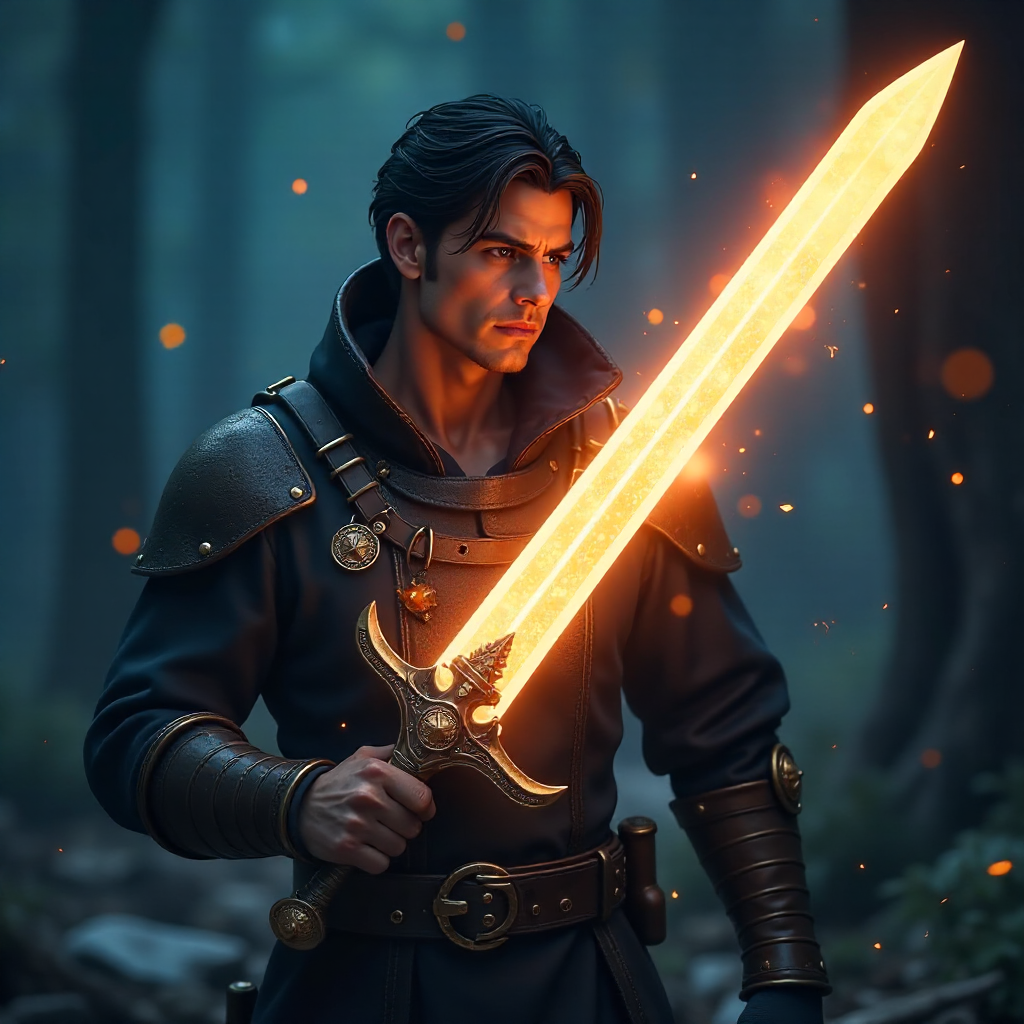
That said, "true ownership" has limits worth understanding. If the game itself shuts down, the NFT still exists on the blockchain, but its utility — the ability to actually use it in gameplay — may disappear. The token survives; the game experience does not. This distinction matters when evaluating the real-world value of any blockchain game asset.
Play-to-Earn and GameFi — A New Economic Model for Players
Play-to-Earn (P2E) and GameFi models allow players to generate real-world value through gameplay — but this comes with significant caveats that any honest account of the model must address. The core idea is straightforward: players earn cryptocurrency or NFT assets by completing in-game tasks, winning matches, or progressing through content, then trade those assets on open markets.
GameFi blends decentralized finance mechanics with gaming, layering staking, lending, and yield-generating features onto game economies. In some implementations, players can stake in-game tokens to earn passive returns or use assets as collateral — concepts borrowed directly from DeFi protocols.
Axie Infinity became the most-cited example of P2E in action. At its peak in 2021, players in the Philippines were reportedly earning more than minimum wage by breeding and battling creature NFTs. That story is real — but so is the collapse that followed when token values dropped sharply and the model's dependency on continuous new player investment became clear.
The honest framing: P2E can generate income, but most models function best as a game first and an economy second. When the financial incentive dominates the design, the game becomes less fun, new players stop joining, and the economy deflates. The most sustainable GameFi projects treat earnings as a byproduct of genuine engagement, not the primary hook.
Decentralized Marketplaces and Player-Driven Economies
Decentralized marketplaces remove the developer as gatekeeper for trading in-game items, enabling direct peer-to-peer transactions between players. Platforms like OpenSea or game-specific exchanges allow players to list, bid on, and transfer NFT assets without needing the original developer's infrastructure or approval.
This has real implications for how game launches and item drops function. When a studio releases a limited set of NFT items at launch, a secondary market forms organically. Prices reflect genuine player demand rather than a developer's fixed price list. Players who got in early can profit; latecomers pay a market rate. It mirrors collectibles markets more than traditional software sales.
For game promotions specifically, this creates new possibilities. A studio can release limited-edition items tied to an event — a game anniversary, a competitive tournament, or a new content drop — and those items carry provable scarcity. Promotional value is built into the asset itself, not just the marketing copy around it.
The trade-off is volatility. Open markets swing based on hype cycles, influencer attention, and macroeconomic conditions in the cryptocurrency space. An item worth $200 in March might list for $20 in June. Players entering these markets need to understand they're participating in speculative asset trading, not just buying cosmetics.
Challenges and Criticism — What's Holding Blockchain Gaming Back
Blockchain gaming faces real obstacles that explain why mainstream adoption has been slower than early enthusiasm suggested. Scalability, user experience, environmental concerns, and genuine speculation problems all contribute to skepticism that isn't baseless.
Scalability is the most technical barrier. Most blockchain networks, when loaded with millions of small gaming transactions, become slow and expensive. Transaction fees — known as "gas fees" on Ethereum-based networks — can exceed the value of the item being traded. Solutions like Layer 2 networks and alternative blockchains (Solana, Polygon) have improved this, but the friction still exceeds what players expect from modern gaming.
The environmental criticism has softened since Ethereum's shift to Proof of Stake in 2022, which reduced its energy consumption by approximately 99.95% according to the Ethereum Foundation. But the perception lingers, and some players remain opposed on principle.
Player skepticism is arguably the biggest friction point. Many experienced gamers associate NFTs with scam projects, celebrity cash-grabs, and games built around speculation rather than fun. That reputation was earned — there were plenty of low-quality projects that prioritized token launches over gameplay. Rebuilding trust requires games that are actually enjoyable independent of their blockchain mechanics.
What the Future Could Look Like for Blockchain-Powered Games
Interoperability is the most compelling long-term promise of blockchain gaming — the idea that an asset earned in one game could carry meaning or utility in another. Imagine unlocking a cosmetic in a racing game that your avatar can also wear in a separate RPG. The blockchain provides the shared ownership layer that makes this theoretically possible.
We're not there yet. Most current implementations are single-game ecosystems, and genuine cross-game asset utility requires industry-wide coordination on standards that doesn't exist at scale. But the direction is clear, and a few early partnerships between studios hint at what an interconnected asset ecosystem could look like.
For game launches and promotions, the shift has practical near-term implications. Studios experimenting with blockchain can offer verifiably limited pre-launch items, create transparent reward structures for beta participation, and build communities around ownership rather than just fandom. The promotional layer becomes part of the game's economic architecture.
The realistic near-future isn't mass replacement of traditional gaming. It's a parallel ecosystem where blockchain-native games offer a different kind of relationship between players and their digital investments — one built on transparency and real ownership, with all the volatility and responsibility that comes with it.
Frequently Asked Questions
Do I need cryptocurrency to play blockchain games?
Not always, but often yes for the full experience. Some blockchain games offer free entry with limited features, while earning or trading NFT assets typically requires a crypto wallet and some initial funds for transaction fees.
Are NFT items in games actually worth anything?
Their value is determined by market demand, scarcity, and the health of the game's ecosystem. Some items have sold for thousands of dollars; others became worthless when a game's player base declined. There's no guaranteed value — treat them like any speculative asset.
What is the difference between GameFi and traditional free-to-play games?
Traditional free-to-play games let you spend money on cosmetics with no ability to recoup that value. GameFi integrates financial mechanisms — earning tokens, trading assets, staking — that allow value to flow back to players, though this also introduces financial risk and complexity.
Can I sell in-game NFTs on any marketplace?
It depends on which blockchain the game uses. NFTs on Ethereum-based games can often be listed on major platforms, but each blockchain ecosystem has its own compatible marketplaces. Not all NFTs are universally tradeable across every platform.
Is blockchain gaming just a scam or speculation?
Some projects have been exactly that. But the underlying technology — verifiable ownership, smart contracts, decentralized trading — is legitimate and functional. The difference lies in whether the game prioritizes genuine gameplay or uses gaming as a thin wrapper around a token scheme. Research the team, the game mechanics, and the tokenomics before engaging financially with any project.